
For anyone who manages or owns a business in China, part of the job is handling Fapiao, which in Mandarin means “invoice”. However, it is not the commercial invoice in the general sense, which merely documents a sale and is not sufficient for tax purposes. Fapiao is the official tax invoice that is issued by the goods/services provider on each sale to the customer/client.
Why fapiao exist
For individuals, fapiaos are required for claiming business expenses reimbursement from the employer. For the organization, they are the original documentation for recognizing the incurred costs, expenses, revenues in operation, as well as for tax deduction. For tax authority and the government, it is to track transactions for tax purposes and prevent tax evasion.
How the Golden Tax System issues one
The State Administration of Taxation regulates the printing, distribution and administration of fapiaos through the “Golden Tax System”. The business needs to obtain the blank fapiao paper (with consecutive numbers specially for the company) from the Tax Bureau to issue the official invoice. The fapiao content must be printed onto the blank fapiao sheet with a particular printer that is associated with the tax system. The printing system requires a secure login through the “Golden Tax Device” (金税盘) to verify company details. The system will automatically generate the correct fapiao number, and the staff is required to place the sheet with the identical number in the printer.
Thirty years of records
Rules vary by bureau
The regulations and restrictions around fapiao are highly localized: the number of fapiaos that can be issued and the maximum amount per fapiao may differ by province, city, district or tax bureau. Even each tax officer might have a different judgment from others. Although not an official consideration, registered capital, office size and headcount can affect the outcome.
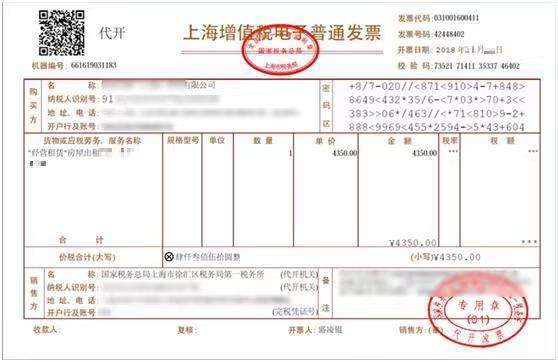
(VAT fapiao sample)
The three sheets behind a VAT fapiao
A fapiao is more than a single sheet of paper. Depending on the type of fapiao, it includes either two or three pieces of paper combined. Where VAT deduction is allowed, it consists of three sheets: the accounting sheet, the deduction sheet and the invoice sheet. Otherwise, there is no deduction sheet.
General and special VAT fapiao
Not all Fapiaos are the same. There are two types of fapiao: General and Special ones. A special VAT fapiao carries the right to input VAT deduction; a general one does not. General VAT taxpayers selling goods such as alcohol, cigarettes, clothing, shoes and cosmetics cannot issue special VAT fapiaos either.
Small-scale or general taxpayer
Small-scale or General VAT Taxpayer?
A business can issue fapiao either as a small-scale taxpayer or as a general one.
Rates for the former are typically 3% (1% during the COVID-19 relief period), but input VAT cannot be deducted. Therefore, they can only use General VAT fapiao for all transactions. General taxpayers pay 6%, 9% or 13% VAT depending on their sector. For what it means to be a small-scale or general taxpayer, and the criteria, see our notes on tax services.
A few notes on issuing a fapiao
Timing
Timing: because VAT liability arises in the period when the fapiao is printed, it is advisable to issue it after payment is received, to avoid pressure on cash flow. Another reason: cancelling a fapiao is slow and complicated, especially if issue and cancellation fall in different accounting periods.
Obligation
Obligation: Fapiao is issued upon the customer’s request, not by default. They are entitled to one when ownership of the goods is transferred or the service has been performed. The customer has the right to report the company that refused the duty to issue fapiao to the relevant authority.
Value in having a trusted corporate service team
Managing fapiao is a unique aspect of operating a business in China. It essentially is the official track record of business transactions for accounting and tax purposes. Mishandling fapiao not only throws accounting and tax figures into confusion, but creates work to correct them and can attract penalties for incorrect records.
Small to medium-sized firms usually require more careful budgeting and cost planning. Using a qualified accountant to manage fapiao wastes their time; hiring junior staff for it adds headcount. Outsourcing fapiao work to a trusted external team can therefore be the better answer. STAR Accounting & Consulting is experienced in providing professional services to foreign enterprises of all sizes with diverse needs. To arrange a chat with our experts, please contact us at sales@star-acc.com.